Same-Day Flower Delivery Explained: Cut-Off Times, Postcodes and What to Expect
October 09, 2026 - Delivery

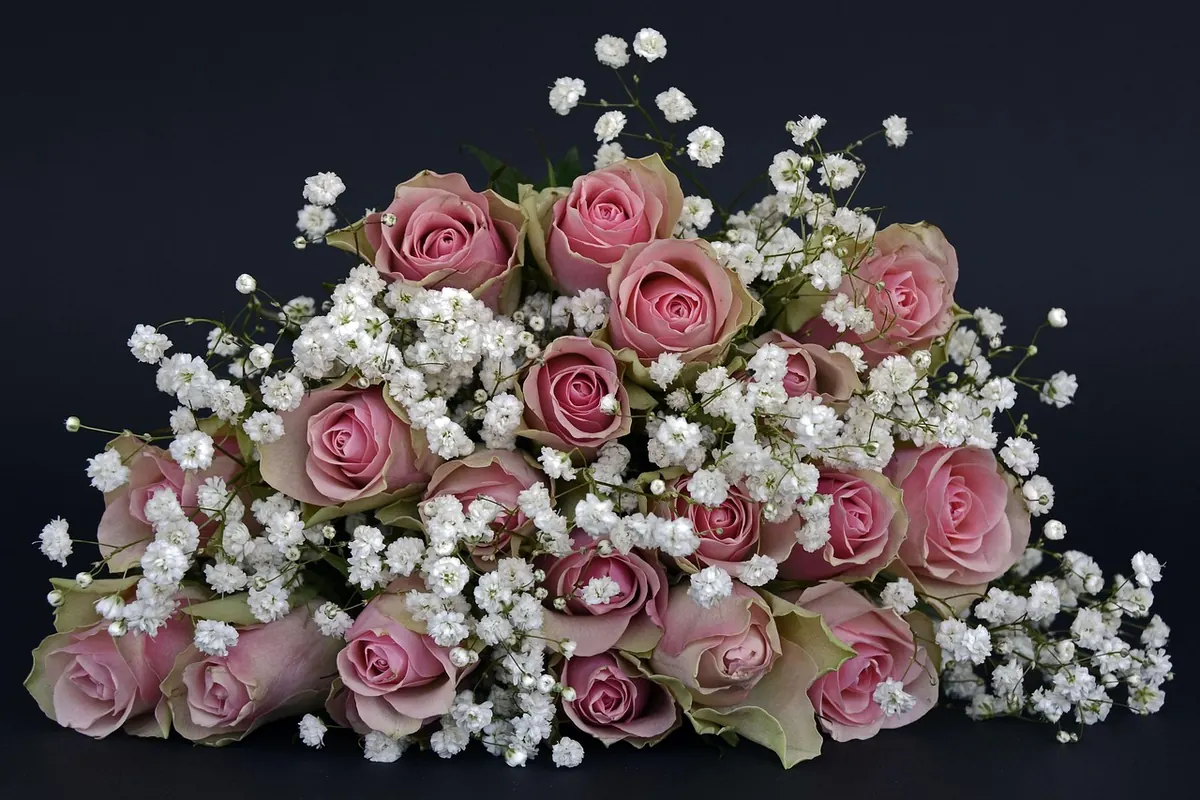
A bouquet, a posy and a sheaf can be made from the same twenty stems of garden roses, and each will feel like a completely different gift when it arrives. The difference is not really about the flowers at all. It is about shape, stem length, and the way the arrangement is meant to be held, carried or displayed once it leaves the shop.
If you have ever stood at a counter asking for "something small and pretty" and been offered three things that sound nothing alike, here is what each term actually means — and how to pick between them without guessing.
"Bouquet" is the broadest of the three words. In most British flower shops it simply means a hand-tied bunch: flowers arranged in the hand with the stems spiralled so the arrangement holds its shape without wire or foam.
Within that, a bouquet can be almost anything. A tight round dome. A loose, meadowy gather with grasses and seed heads. A long trailing shape for a bride. A wide, asymmetric piece for a sideboard. Stems are usually left reasonably long, wrapped in paper or a sleeve, and either handed over as they are or trimmed down at home to suit the vase.
So when someone says "bouquet", the useful follow-up question is: what shape and what stem length? That single question prevents most of the disappointment that follows a flowers-by-request purchase.
A posy is a small, circular bouquet with a domed top and short stems. Historically it was a nosegay — a handful of scented flowers and herbs carried close to the face — and the shape has barely changed since. Modern posies are packed tightly so there are no gaps, with stems cut to roughly the height of a small vase or a jam jar.
They suit:
There is nowhere to hide in a posy. The flowers have to be in good condition and roughly matched in size, or it reads as a handful of odds and ends. Made well, it looks like a jewel.
A sheaf is made by gathering long-stemmed flowers and foliage into a flat, spreading bundle, then tying them at a single point with raffia or twine. The finished thing looks like a small armful laid out on a table, with the stems exposed below the tie, which usually sits about a third of the way up.
Sheaves are the workhorse of hand delivery. You can carry one in the crook of your arm, hold it against a doorway while you knock, and pass it over without needing a vase within reach. The same flat, generous shape is traditional for sympathy tributes, where a sheaf is laid on a coffin or placed at a graveside — which is worth knowing if you are ordering flowers for a funeral and want to use the term the florist expects.
All three are hand-tied, all three want water within a few hours of arriving, and all three benefit from a fresh angled cut and a clean vase. Shape changes the style; condition keeps it looking good for a week.
For a birthday, think about where the flowers will live. If there is a favourite jug on a windowsill, a bouquet with longer stems gives the most room to play. If the recipient works at a shared desk or is recovering in a small room, a posy is kinder.
For thank-yous, a posy does the job precisely because it is small. It says "this is for you, now" rather than "find a container for this". Add a note about the scent if you are choosing stocks, lilies or freesias, since these divide people sharply.
For events, the shapes do different work. Bridesmaid posies echo the bride's bouquet without competing with it. Low, round posies on tables let guests see across to each other. Wider bouquets fill entrances, stairwells and church steps, where their size reads from a distance. And if you are ordering several pieces, tell the florist the height of the vases involved — a 40cm stem in a 15cm vase is a problem nobody wants to solve on the morning of a wedding.
When you order, mention four things: the shape you want, the colour palette, roughly where the flowers are going, and whether anyone in the household is sensitive to scent. A florist can work with all of that and will usually suggest something better than you had in mind.
The genuinely useful test is not which shape is prettiest but what happens in the first five minutes after it is handed over. A door opening, a hallway, no vase and a person already holding a bag: a sheaf. A desk and a short lunch break: a posy. A jug on a windowsill waiting to be filled: a bouquet, stems left long so it can be cut to fit.
Ask for the shape as clearly as you ask for the flowers, and whatever you send will look right the moment it lands in the recipient's hands.
Photo: trhquan / Pixabay
How same-day flower delivery works across UK cities, from cut-off times and postcode limits to courier routes and...
Ward rules, delivery windows and sensible packaging decide whether a hospital bouquet reaches the bedside. Here's...
Copyright © 2026 Petal Bay. All Right Reserved.